The moment a meal leaves your kitchen, it leaves your control. It passes through a courier’s hands, a delivery bag, a car, a lobby, and sometimes a doorstep before the customer opens it. Most of those handoffs are uneventful, but a customer who finds a container already opened will not know why. Tamper-evident packaging solves part of that problem. It does not guarantee a delivery is safe, but it gives you, your courier, and your customer a clear sign that a container arrived without its seal being disturbed. This guide explains what tamper-evident packaging for food delivery is, whether it is required, the main types, how to match a seal to your food, and how to use it as one part of a safe delivery process.
How Tamper-Evident Packaging Makes Food Delivery Safer
What Tamper-Evident Packaging Is, and What It Is Not
Tamper-evident packaging has a feature that shows whether the package has been opened. The Canadian Food Inspection Agency describes the idea in its guidance on sealed meat shipments: a tamper-resistant seal—applied as tape, a strap, or a sticker—must be designed so the container cannot be opened without breaking the seal or destroying the tape or sticker. The agency also notes that many food processors use this method to increase security.
The key distinction is between tamper-evident and tamper-proof. A tamper-evident seal does not stop someone from opening a container. It shows that the container was opened. That makes it a tool for confidence and accountability, not a lock, and no packaging is truly tamper-proof. It works best alongside good procedures, covered below.
Is Tamper-Evident Packaging Required for Food Delivery?
There is no general federal requirement for tamper-evident packaging on restaurant delivery in the federal food rules reviewed for this guide. Federal rules do refer to tamper-resistant seals in specific, narrow contexts, such as certain meat shipments described by the Canadian Food Inspection Agency. For restaurants, caterers, and delivery kitchens, tamper-evident packaging is generally a best practice and, in some cases, a condition set by someone else, such as a delivery platform, an insurer, a venue, or a local authority. Provincial and municipal rules vary, so check with your local public health unit and any partners you work with.
Why Tamper-Evident Packaging Matters for Food Delivery
The benefits are practical.
- Customer confidence. A sealed container tells customers no one has opened it since it left your kitchen.
- Accountability. If a seal arrives broken, you have a clear starting point for finding out what happened, instead of one person’s word against another’s.
- Fewer disputes and refunds. A visible seal can help settle questions about whether an order was opened or swapped.
- Protection from accidental opening. A properly secured seal can also help keep lids in place and prevent spills during transit.
- A more professional impression. A neat, sealed package signals care for the product and the customer.
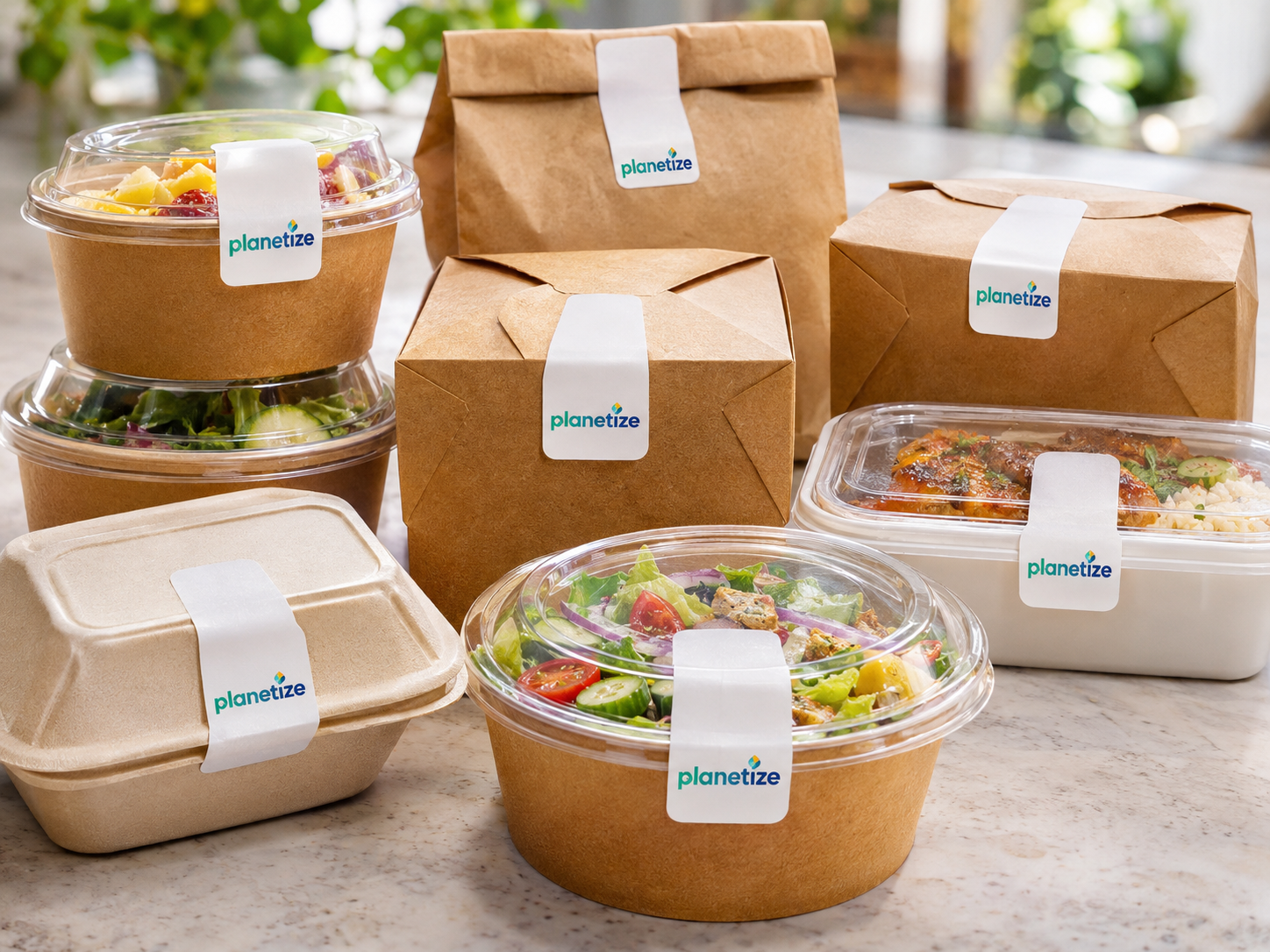
The Main Types of Tamper-Evident Packaging Features
Several formats are common in food delivery. The right one depends on your container and your menu.
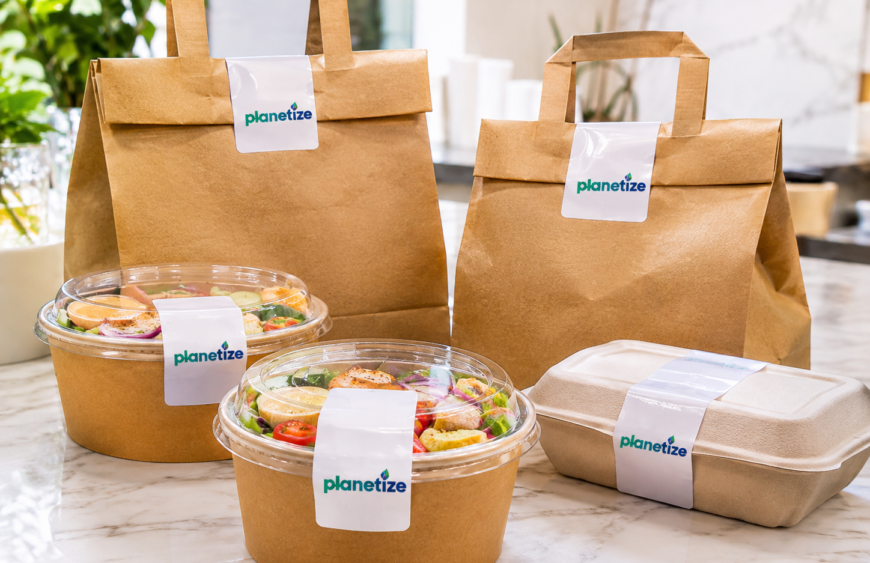
- Tamper-evident stickers and labels. These are placed across the lid and the container edge. Some leave a visible pattern or tear when removed.
- Tamper-evident tape. A strip across the closure that leaves evidence if it is lifted.
- Shrink or neck bands. A band around the lid or neck of a container that must be broken to open it.
- Heat-sealed film. A film bonded to the rim of a container that must be peeled or torn to open.
- Tear-strip or perforated tab lids. Lids with a built-in strip or tab that breaks when opened.
- Locking-tab containers. Clamshells with tabs designed to snap or tear on first opening.
- Sealed bags. Bags closed with an adhesive strip or a sticker across the fold.
How to Match the Seal to Your Food
A seal that works on a cold salad may fail on a hot, steamy, or greasy meal. Think about:
- Temperature and condensation. Hot food releases steam, and moisture can weaken some adhesives. Ask whether a seal suits hot food, high humidity, or refrigerated conditions.
- Grease and sauce. Oils can reduce stickiness where a seal meets the container.
- The surface it sticks to. Paperboard, coated board, moulded fibre, and plastic each behave differently, so confirm that a sticker or tape bonds well to your container.
- Venting. Sealing hot food tightly can trap steam and make it soggy. Some formats allow venting while still showing tampering.
- How the customer opens it. A seal that is hard to open, or that tears the lid, creates a poor experience.
Keep Food Safe Inside Tamper-Evident Packaging
A seal shows whether a container was opened. It does nothing to protect against temperature or bacteria. Health Canada describes the temperature danger zone, between 4°C and 60°C, as the range in which bacteria multiply fastest, which is why hot food should be kept hot and cold food kept cold. A tightly sealed container can hold food at an unsafe temperature just as easily as an open one, so a seal is no substitute for time and temperature control. Plan your delivery so food spends as little time as possible between the kitchen and the customer, use insulated bags where they help, and remember that cooled food should be reheated thoroughly before serving.
Check That Seals, Labels, and Adhesives Are Suitable for Food Contact
Anything that could touch food needs to be safe for that use. Health Canada explains that Division 23 of the Food and Drug Regulations, in section B.23.001, prohibits selling food in a package that may pass a harmful substance to the food, and that responsibility for compliance rests with the food seller. In practice, that means asking your supplier about the films, adhesives, and inks used, especially where a sticker or tape could contact food or the food-contact surface of a lid. Where possible, place seals and labels so they don’t touch the food, and ask for documentation confirming suitability for food use.
Consider Sustainability Without Overclaiming
It is easy to add layers of tape, stickers, and film, and each one adds material. A few habits help. Choose a seal sized to the job, with no more material than it needs. Ask whether the seal or label is compatible with the container’s disposal stream, as adhesives can affect how it is recycled or composted. Request supporting information from the supplier. Use words like “compostable” only for packaging that is certified compostable, and state the conditions it requires. Avoid vague terms such as “eco-friendly,” which the Competition Bureau warns can suggest a broader benefit than a product delivers. And remember that disposal options depend on the local program, so say what is true where your customers are.
Procedures That Make Tamper-Evident Seals Work
A seal only helps if you use it consistently.
- Seal at the packing station, after the final check. Do it every time, and in the same place, so a missing seal stands out.
- Match the order. Put an order number or name on the seal or label, so a swapped bag is easy to spot.
- Train your team and couriers. Make sure everyone knows what an intact seal looks like and what to do if one is broken.
- Check at handoff. A quick look at the seal when the courier collects the order and when the customer receives it closes the loop.
- Have a plan for a broken seal. Decide in advance what you will do if a customer reports one, and make it easy for them to contact you.

A Quick Checklist Before Choosing Tamper-Evident Packaging
Ask yourself and your supplier:
- Does the seal work with our container material? Confirm it bonds and holds.
- Will it hold with hot, wet, or cold food? Ask about heat, steam, and condensation.
- Is it suitable where it may touch food? Ask for documentation on adhesives, films, and inks.
- Does it still allow venting where we need it? Avoid trapping steam.
- Is it easy for customers to open? Test it yourself.
- What happens to it at disposal? Ask about compatibility and certification, and avoid unsupported claims.
- Do our delivery partners or local authorities expect it? Check any requirements.
Seal Every Delivery With Confidence: Choose Planetize Packaging for Sustainable Packaging Solutions
Tamper-evident packaging for food delivery is a small addition that builds trust. It provides visible evidence that the sealed container has not been opened during transit, gives you a clear starting point if something goes wrong, and works best when it is matched to the food, safe for contact, kept to the material it needs, and backed by consistent habits.
At Planetize Packaging, we supply sustainable packaging solutions for restaurants, caterers, and hospitality groups, and we care about the details that make delivery work—from the container itself to how it closes. We are glad to talk through the packaging you use for delivery, the seal options that fit it, and the documentation worth asking for, so you can protect your customers and your reputation without adding more material than you need. Contact us to discuss what your delivery menu needs.
Frequently Asked Questions About Tamper-Evident Packaging
What Is Tamper-Evident Packaging?
Tamper-evident packaging includes a feature, such as a seal, band, tear strip, or sticker, that shows whether the package has been opened. A properly designed tamper-evident seal shows visible evidence when someone attempts to open or remove it.
Is Tamper-Evident Packaging Required for Food Delivery in Canada?
A general federal requirement for restaurant food delivery is not part of the federal food rules reviewed here, although federal rules refer to tamper-resistant seals in narrow contexts such as certain meat shipments. It is widely treated as a best practice, and delivery platforms, insurers, or local authorities may set their own expectations. Check the rules where you operate.
What Is the Difference Between Tamper-Evident and Tamper-Proof Packaging?
Tamper-evident packaging shows that a package has been opened. Tamper-proof would mean it cannot be opened at all, and in practice, no packaging is fully tamper-proof. Tamper-evident seals provide visible evidence, not a guarantee.
What Kind of Tamper-Evident Seal Works for Hot Food?
Choose a seal designed to withstand heat, steam, and condensation, and confirm it bonds to your container material. Some formats allow venting, which helps prevent soggy food. Ask your supplier to confirm suitability for your menu.
Does Tamper-Evident Packaging Make Food Safer?
It shows whether a container was opened, which supports security and trust. It does not control temperature or bacteria, so you still need safe time-and-temperature practices, such as keeping hot food hot and cold food cold.