A kitchen makes the same dish many times in a shift, portions it to a fixed size, chills or freezes it and then asks the packaging to survive a cold chain and a customer’s reheat. That repetition makes packaging choices critical: a small flaw in the tray is paid for on every order. What works for your first fifty meals a week doesn’t work at five hundred.
This guide takes you through the packaging solutions for growing meal prep businesses and how your needs change at each stage.
Meal Prep Business Growth and Changing Packaging Needs
1. Start With the Portion and Tray Format
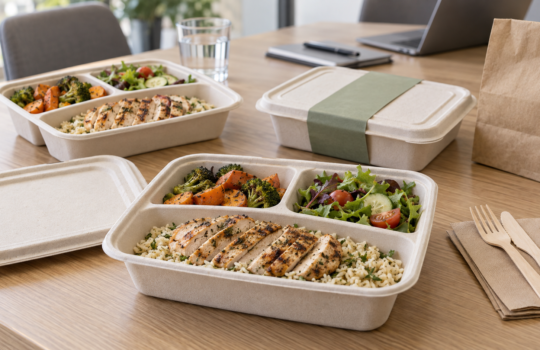
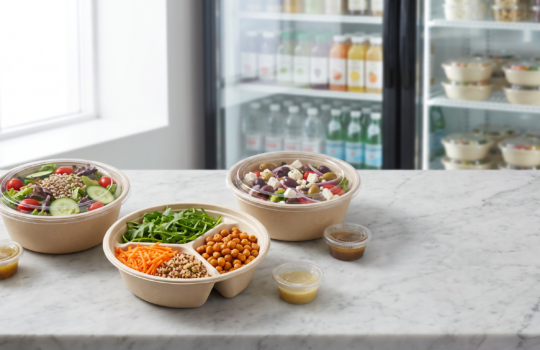
Pick the tray based on the product – not out of a catalogue. First, determine three things: net weight or volume of the finished portion, including sauce; how many components must remain separate; and how much headspace is above the food. These answers will determine the footprint, the depth and whether a single compartment will do or a divided tray is the better fit. A divided tray takes longer to fill, but it keeps a garnish out of a sauce and a crunchy element from going soft. Tray depth can also affect how many containers fit into a crate, which changes your storage and delivery calculations.
2. Match the Pack to How Customers Reheat
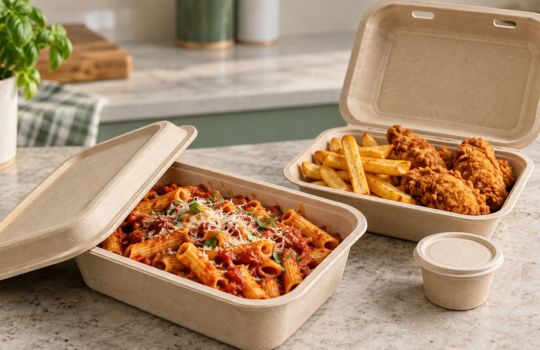
Ask what really happens to a meal at the customer end. Do they eat it cold, microwave it, or heat it in the oven? Is it heated in the tray or transferred to a plate first? Does the film stay on, vent or come off? The answers quickly narrow down the specification, since the reheat route usually determines the material and the closure together. A meal that is heated in its tray requires a container rated for that route, and the rating should include the lid or film, not just the tray.
3. Build the Pack for Your Chill or Freeze Chain
Almost every meal prep business has a temperature gap between the kitchen and the customer. In Canada, cold food should be kept at 4°C (40°F) or colder. Commercial freezers are generally expected to keep food at -18°C (0°F) or colder. When a pack is chilled or frozen, several things happen: moisture migrates to the tray wall, condensation forms on the film as the pack warms, the pack becomes heavier and more rigid, and the customer’s thawing step adds another handling event. The chain depends on the entire pack, not the tray alone; therefore, test the tray, film, and closure together.
4. Standardize Sizes as Volume Grows
When you are small, you can have a different container for each dish. It gets expensive as you get bigger. A smaller family of tray sizes that use the same lids makes ordering easier, speeds up the packing line, and reduces the stock you have to store. Nestable and stackable designs reduce your storage footprint, and standardized sizes fit more efficiently into delivery bags and crates, lowering transport cost per order. The goal is to use the fewest sizes that fit your menu.
5. Think Sealed Closures With Distance and Volume Increase
Snap-on lids can work well for short trips and small batches, depending on their design and seal integrity. But as volume and delivery distance grow, many businesses opt for film-sealed trays that resist leaks and show tampering more obviously. A sealed closure can also improve the pack’s ability to withstand stacking and movement. Tray sealing equipment is an investment, so the right time to switch depends on your volume, delivery model, and the cost of leaks or lifted lids in refunds and remakes. Fast, dependable sealing closures also keep the packing line moving; slow or unreliable closures create bottlenecks.
6. Early Planning for Canadian Requirements and Labels
Determine who applies the label and when. This decision determines whether you get a sleeve pre-printed on the tray or apply it after sealing. It also affects the packing line. Canadian rules also have a say. English and French are required for mandatory information on prepackaged food for consumers, including best before dates and storage instructions such as “Keep Refrigerated” or “Keep Frozen”. Best before dates are generally required on applicable products with a durable life of 90 days or less, subject to specific exemptions. What applies to your product will depend on how it is sold. Confirm the details with the Canadian Food Inspection Agency or your local public health unit. Leave enough space on the pack for the label.
7. Compare Cost Per Portion, Not Cost Per Tray
Packaging is a small number multiplied by a big number, so a few cents a tray becomes a big line at volume. Include the cost per portion of the film, sleeve, and label. Add the cost of a failed pack. A leak can mean a refund, remake, and customer dissatisfaction, not just the cost of a tray. Break out one-time tooling or artwork costs from the per-unit price so you aren’t comparing a small first order to a large one. And watch the minimum order quantity; a low unit price behind a large minimum is not the cheaper pack when you are launching.
8. Consider Delivery, Stacking and Reusables
Meal prep is generally a delivery business, and a pack that is otherwise solid can fail in delivery. One potential failure is a pack losing shape or its seal after being stacked and moved. Think about how high the packs are stacked, whether they are stacked flat or on their side, and how the customer opens the pack. Reusable containers are sometimes considered in subscription models. They can reduce long-term material cost, but add reverse logistics and sanitation work. So the trade-off depends on your delivery radius, return rates and labour.
9. Establish a Reliable Relationship with Suppliers
As you grow, consistent supply is as important as price. Production can halt due to packaging disruptions, so a supplier should be able to demonstrate capacity, stable lead times, and clear bulk pricing. Share your forecast, order samples before committing to bulk, and ask for documented heat ratings and any certifications behind sustainability claims so the product matches its description.
Packaging Brief to Prepare Before You Order
Writing down what you know already turns a supplier conversation into a clear brief.
- Portion: net weight or volume, including sauce, and fill level on the production line.
- Format: footprint and depth of tray, distribution of compartments.
- Reheat method: cold, microwave or oven, and whether film stays on.
- Chain: frozen, chilled or both and the steps the pack goes through.
- Transit: The way packs are stacked and transported.
- Closure and label: film or lid and who applies the label.
- Volume: weekly portions now and at target.
Find Packaging That Fits How Your Kitchen Actually Runs, Only at Planetize Packaging
As your meal prep business grows, packaging becomes a matter of choices that multiply. A tray that fits the portion. A pack that matches the reheat pathway and chill chain. Fewer, better-sized choices. A closure suited to your delivery conditions. Labels considered from the start. Fair cost per portion. And a supplier you can trust.
Planetize Packaging provides sustainable packaging solutions tailored to the operational needs of food businesses, from restaurants and caterers to hospitality groups and meal prep operations. We offer bulk-friendly pricing to keep cost per unit manageable as order volume increases. If you are scaling up a meal prep business or changing your current packaging, contact Planetize Packaging to discuss your portions, reheat method, and volume.
Frequently Asked Questions About Meal Prep Packaging
What Packaging Does a Meal Prep Company Need?
The five operational factors to be selected are: portion size and tray format, how customers reheat, whether the pack is chilled or frozen, how it is stacked and delivered, and the cost per portion the business can bear. Those answers will narrow down the tray, material and closure before you contact a supplier.
Do Meal Prep Containers Have to Have Compartments?
Only if the menu demands it. A divided tray can keep components separate and improve presentation, but it also slows filling and reduces usable volume for the same footprint. So a divided tray is a conscious decision, not an automatic upgrade.
What Is the Temperature for Refrigerated and Frozen Meal Prep Storage in Canada?
Keep cold food at 4°C (40°F) or colder, and frozen food at -18°C (0°F) or colder, with packaging that lasts the whole way through the chain.
How Many Containers Should I Order Initially?
Order the first time based on your expected weekly volume, not the lowest unit price. A low price with a large minimum order may be the same as a slightly higher price you can actually use.