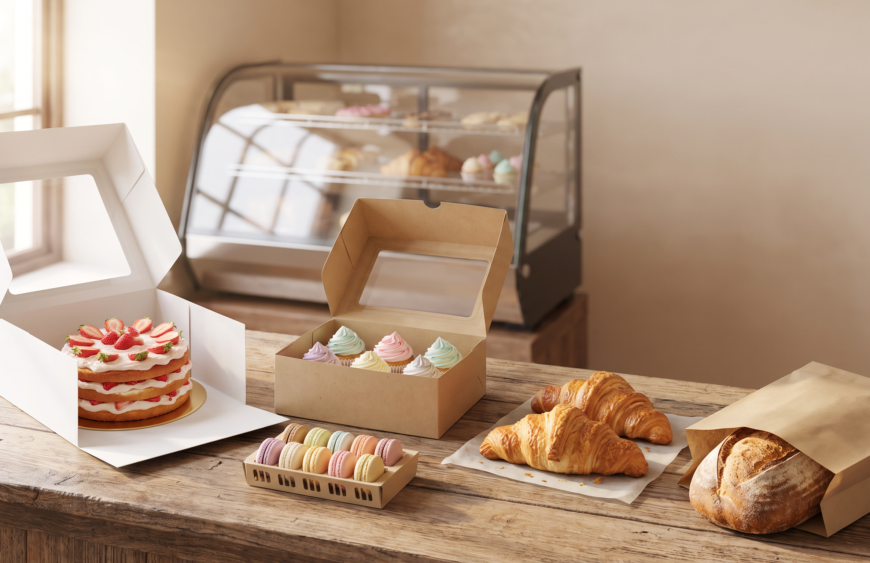
Baked goods are one of the most perishable items sold by a food business. A cake can slide, a macaroon can crack, a croissant can go soft, and a grease spot can ruin the look of a box before the customer has opened it. Good bakery packaging must protect the product, display it, and make it through the trip from the display case to someone’s kitchen table. This guide will explain what packaging needs to do at each stage.
What Good Bakery Packaging Must Protect Against
Crushing and Sliding: Rigid Boxes, Inserts, and Cake Boards
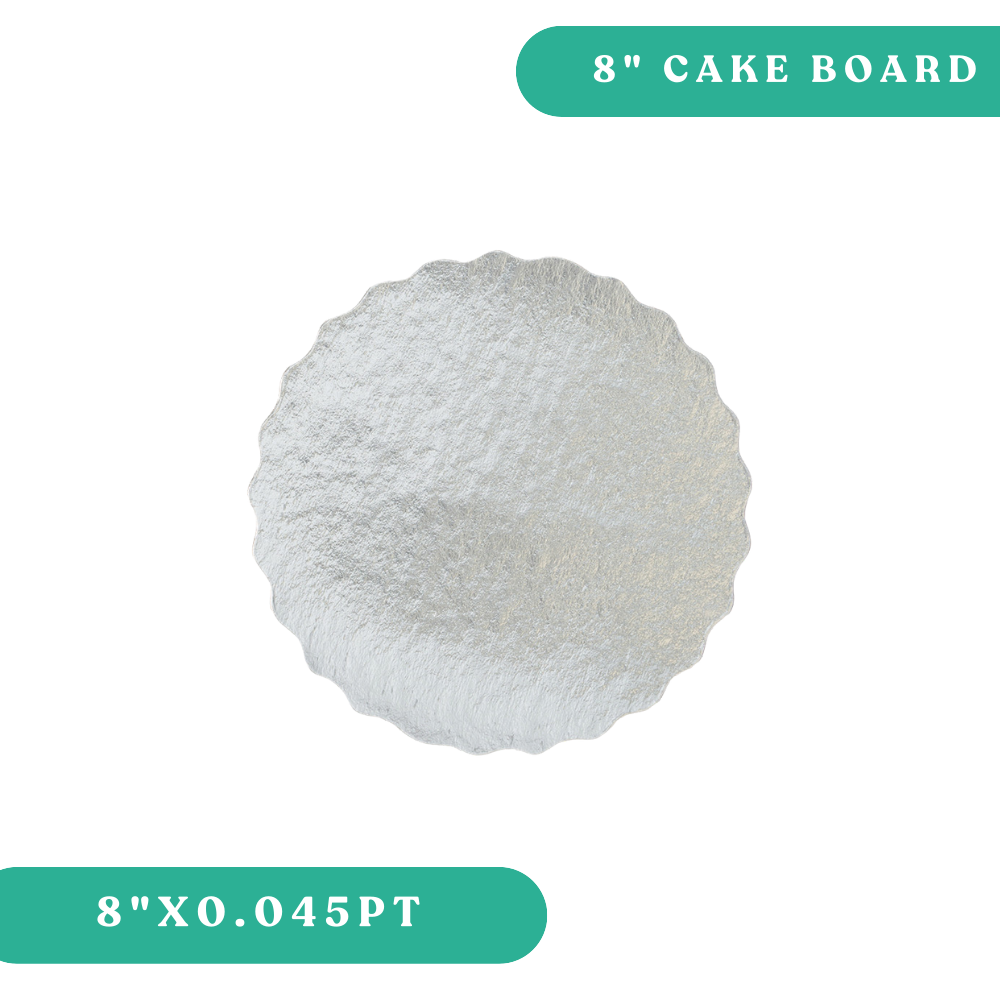
Cakes and layered desserts need rigid boxes, often corrugated, sized closely to the product so they can’t slide around. Support underneath is provided by cardboard inserts and cake boards, and insert trays hold cupcakes and macarons in place individually. A drop is not the most common reason for a damaged dessert. It’s a product bouncing around in a box too big for it. At the pack station, a brief sizing chart indicating which box and board work best for each cake or tray size removes guesswork during busy periods and ensures consistency in results from one staff member to another.
Grease and Moisture: Liners and Grease-Resistant Materials
Pastries, doughnuts and cookies leave grease, and grease shows right through plain paperboard. Grease-resistant boxes and greaseproof liners help prevent grease from staining the outside of the package. One question to ask any supplier directly is how they achieve grease resistance. Some paper that resists grease has been treated with PFAS, and regulators in Canada have been moving to restrict PFAS use in food packaging, although suppliers describe the current rules differently. Don’t assume a product is PFAS-free. Ask for written confirmation.
Staleness and Sogginess: Matching Breathability to the Product
Different baked goods need different environments. Crusty loaves need a little airflow. Sealed packaging traps moisture and softens the crust. Breathable paper bags or bags with small vents are better. Soft cakes and filled pastries, by contrast, are better protected in closed boxes that help prevent them from drying out. A clear plastic window or film also affects airflow, so choose packaging based on what the product really needs.
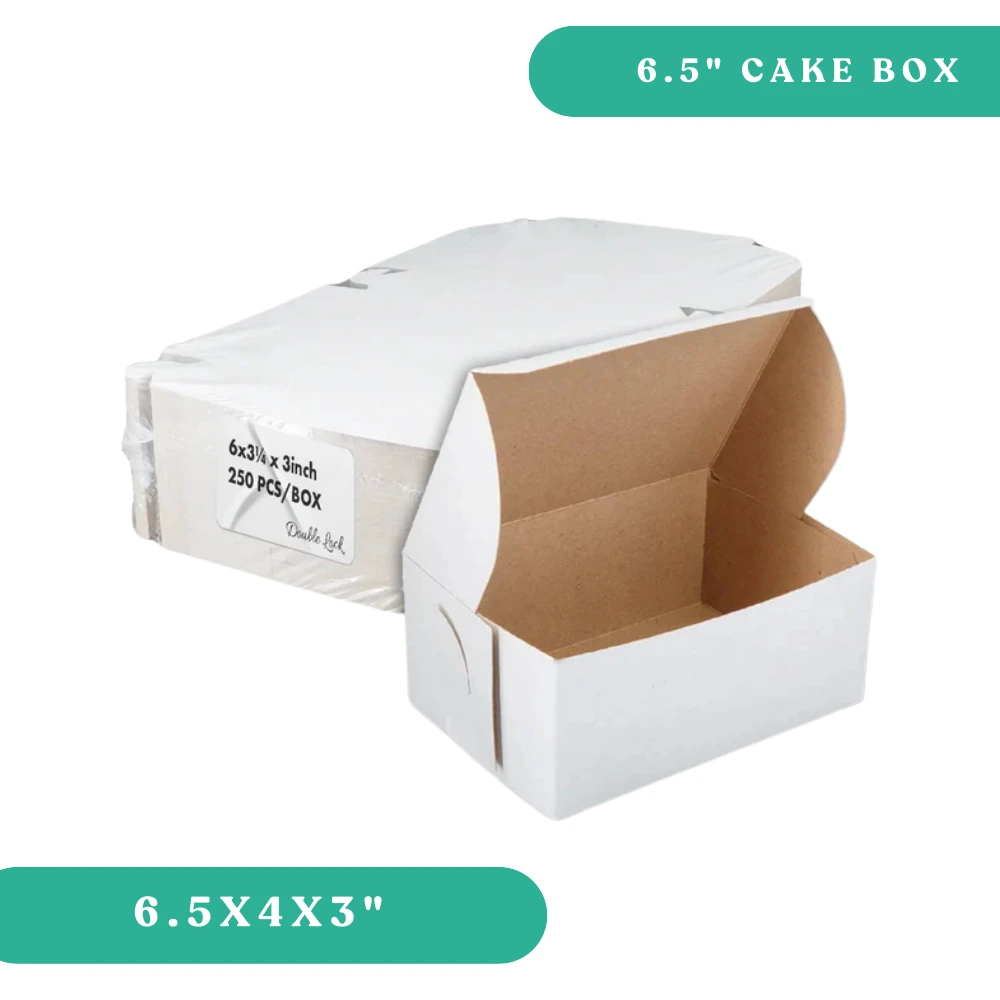
Windows Sell Baked Goods
Baked goods are bought with the eyes, and a window lets customers see what’s inside the box on the counter or in a carry-out bag. That’s why windowed boxes are some of the most common formats. If sustainability is part of your story, ask what the window film is made of and how it’s meant to be disposed of, as the window can affect how a box is recycled.
Temperature-Sensitive Desserts Need a Cold Plan
Packaging can only support the cold chain; it cannot replace it. Cream cakes, mousses and cheesecakes need refrigeration. In Canada, cold food should be kept at 4°C (40°F) or below. Strong, clear domes and cups keep delicate desserts from getting crushed, and insulated bags or ice packs help with delivery. Note that some clear plastics made from plants (like PLA) are only suitable for cold items. Staff should also tell customers at handoff how long a refrigerated dessert can safely stay out, since packaging alone cannot communicate this information.
Transport Stress: Sizing, Stacking, and Branding
A box that stacks well and fits a standard delivery bag saves time at the pack station and reduces damage in transit. A small, consistent range of box sizes also simplifies ordering and makes it more predictable. Consistency in branding is also important because the only part of the bakery a gift recipient ever sees is often a well-presented box.
Common Bakery Packaging Mistakes to Avoid
A few habits cause most of the problems with bakery packaging.
Using Boxes That Are Too Big
Unused space lets product move. Size the box to the product.
Sealing Hot Items
Steam condenses and softens crusts. For products with toppings that are prone to moisture-related deterioration, trapped steam can also affect their appearance.
Skipping Inserts for Delicate Items
Macarons and cupcakes need their own support.
Assuming All Grease-Resistant Liners Are Equal
Materials and treatments vary, so check what is actually in the product.
Package Every Bake for the Display Case and the Drive Home, Only at Planetize Packaging
Bakery packaging has to do a number of things simultaneously: hold the product, resist grease and moisture, showcase it, and keep it cool when necessary. A bakery’s products look their best when the packaging format is customized for each item rather than using a single box for everything. A consistent system also makes it easier to run the daily rhythm of a busy counter.
Planetize Packaging provides sustainable packaging solutions tailored to the operational requirements of bakeries, cafes, caterers, and hospitality groups, including display, transport, and consistent branding across a menu. If you are looking at packaging for your baked goods and desserts, Planetize Packaging can help you determine what works for your products and volume. Start the conversation with Planetize Packaging.
Frequently Asked Questions About Bakery Packaging
How Should I Package Cakes and Delicate Desserts?
A rigid box that fits the product fairly closely, with a cake board or insert underneath, is usually best. For example, cream cakes and other refrigerated desserts also require a cold-chain plan, as packaging supports refrigeration but does not replace it.
Should You Pack Bread in Sealed or Breathable Packaging?
Crusty loaves tend to fare better in breathable paper or packaging with small vents. Sealed packaging traps moisture and softens the crust. Closed packaging often provides better protection for soft breads and cakes.
Are Grease-Resistant Bakery Boxes Free of PFAS?
Not necessarily. Some grease-resistant paper has been treated with PFAS. Check the current Canadian regulations applicable to the product and ask your supplier for written confirmation that the product is PFAS-free.