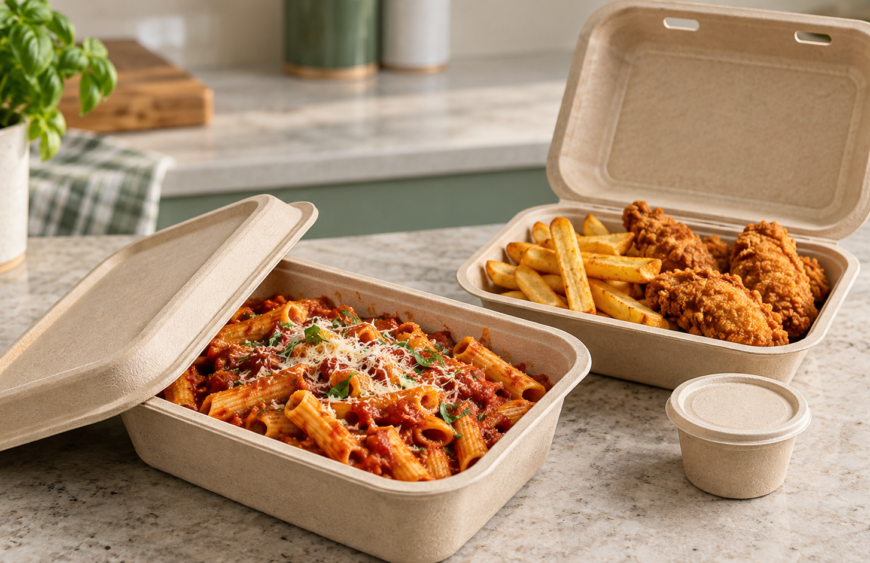
A container that works great on the counter can warp, leak or fail when someone puts it in a microwave. The failure is the food service operation’s, not the manufacturer’s. A melted lid. A sauce that leaks. A customer who stops ordering. Whether to use microwave-safe containers is first a materials question and second a labelling question. Neither can be assumed from the appearance of a container. This guide will take you through what to look for, material by material.
Things to Think About Before Buying Microwave-Safe Containers
Start With the Material, Not the Marketing
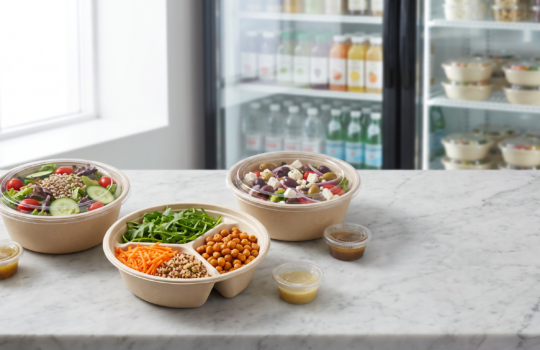
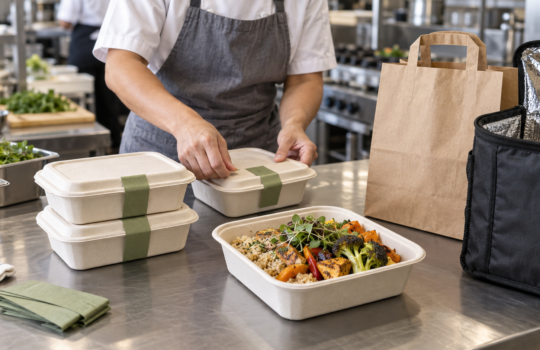
The typical microwave-safe plastic used in food service is polypropylene (PP), which handles the heat of reheating very well. Moulded fibre and bagasse (sugarcane fibre) containers are also often rated for short reheats, with one supplier citing food temperatures up to about 93°C (200°F), although this is product-specific. Standard PLA, however, is generally unsuitable for reheating. If you plan to serve hot food, you will need to use CPLA (crystallized PLA), which costs more. Foam polystyrene is a no-no in a microwave, and foil or aluminum containers generally don’t belong there either.
Don’t Assume, Look for a Clear Rating
“Microwave-safe” is a claim, but it should be backed up by the manufacturer’s specifications for that particular product. Look for a stated rating, a reheating time limit, and a clear microwave-safe marking on the container or its packaging. One supplier describes bagasse as suitable only for short reheating after the finished container, food load and lid system have been validated together. If a supplier can’t tell you how long and how hot a container is rated for, consider it unrated.
Vented Lids Are as Important as the Bowl
Steam needs to escape. A tightly sealed lid can trap steam and allow pressure to build. This can force liquid out at the seam or warp the container. Vented lids allow steam to escape, or you can loosen or lift the lid before heating to keep reheating predictable. If the lid and bowl are made of different materials, check the rating for both, as the lid is often the weaker part.

Consider the Food You Really Serve
Not all dishes are equally heated. Oily, sugary and saucy foods can get hotter than water-based ones, and dense foods can heat unevenly, so a container rated for a quick reheat of soup may perform differently with a heavy curry or a glazed protein. Choose a container and test reheating with your actual menu items, not water. A small trial run with a few sample orders is very cheap compared to reordering a full case if a container fails in a customer’s kitchen, and it will tell you if the lid, bowl and food all play well together.
Tell Customers What They Should Do
A rating is only useful if the customer uses it. Brief printed guidance on the lid, sleeve or bag, such as “vent lid” or “heat in brief intervals,” reduces melted containers and complaints. Health Canada recommends removing food from non-microwave-safe packaging before heating, and this is a good standard for labels to follow as well: if a container is not rated for microwave use, state this clearly and tell customers to transfer the food. The same goes for staff. If you do your own reheating in the kitchen using these containers, make it clear to the team which ones are rated and for how long, so the rule doesn’t live only in one person’s head.
Balance Performance with Your Sustainability Objectives
Good reheating performance and sustainability can go hand in hand. Fibre-based containers will cover many short-reheat uses, while PP will handle the more demanding ones. The trick is to match the material to the job and ask for the supplier’s rating rather than a green-sounding label. Sustainability claims will only serve a brand if they survive use.
What Not to Put in the Microwave
Certain containers can cause problems when used in a microwave.
Foam Polystyrene
It melts and warps with heat, and Health Canada specifically notes that Styrofoam trays are not suitable.
Aluminum Containers and Foil
Avoid aluminum containers and foil unless the manufacturer explicitly states that the product is suitable for microwave use.
Regular PLA
Not heat resistant, so keep for cold goods.
Unrated Containers of Any Kind
If a rating is not mentioned, assume it’s not microwave safe.

Planetize Packaging: Choose Microwave-Ready Packaging That Meets Your Sustainability Goals
The list of checks for microwave-safe containers is short: the right material, a rating from the manufacturer, vented lids, testing with your real menu, and clear instructions for the customer. Miss any of these checks, and you risk complaints and costly remakes. Get them right, and reheating is one more thing the packaging quietly handles.
Planetize Packaging offers environmentally friendly packaging solutions for restaurants, caterers, and hospitality groups, and can help you match containers to how your food is actually reheated. If you’re reviewing your packaging for reheat-ready items or want options that balance performance and your sustainability story, get in touch with Planetize Packaging to discuss what suits your menu.
FAQs
Are Bagasse or Moulded Fibre Containers Microwave-Safe?
Many are rated for short reheats, but it depends on the particular product, the food and the lid. Check with the supplier for the stated rating and reheating time limit. Test with your own menu items.
Are Foam Food Containers Microwave-Safe?
No. Foam polystyrene isn’t microwave-safe, and Health Canada says to take food out of packaging, such as polystyrene trays, before microwaving.
What’s the Difference Between PLA and CPLA for Reheating?
Standard PLA is not heat-safe. CPLA, short for crystallized PLA, can offer greater heat resistance than standard PLA, but microwave suitability depends on the specific product’s rating. CPLA is also more expensive.