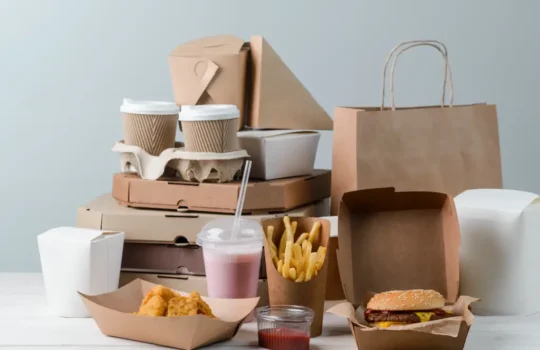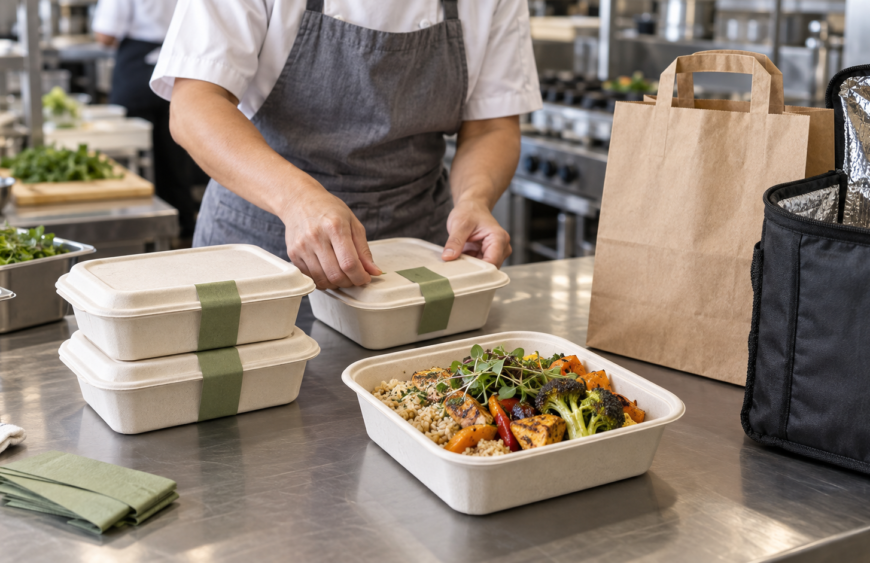
A cloud kitchen doesn’t have a dining room, a host stand and often, no storefront. Since the only physical thing a customer touches is the box the food arrives in, that box is doing more work than packaging typically does in a traditional restaurant. Here’s what really matters when packaging is built for delivery from the ground up, rather than adapted from dine-in containers as an afterthought.
What Really Counts in Cloud Kitchen & Delivery Packaging
Containment is Key: Leak-Proof & Grease-Resistant
Food that must be delivered travels farther and is handled more than a plate carried from the kitchen to the table. Sauces change, grease pools and containers are stacked, tilted and bumped around in a bag for anywhere from ten minutes to an hour. Leak-proof seams and grease-resistant liners aren’t a nice-to-have here; they’re the baseline a delivery container has to clear before anything else about it matters.
Temperature Retention Isn’t Optional Once Food Leaves the Kitchen
If the packaging and insulation aren’t doing their jobs, hot food can leave the kitchen at 165°F and make it to your door closer to 120°F, and that’s the difference between a good delivery experience and a lukewarm one. Insulated containers, foil-lined boxes, and properly insulated delivery bags all help close that gap. And it matters even more for cloud kitchens, since there’s no way to reheat or adjust the food before it reaches the customer the way a server might catch an issue in a dine-in setting.
Vented Lids Fix the Soggy-Food Problem
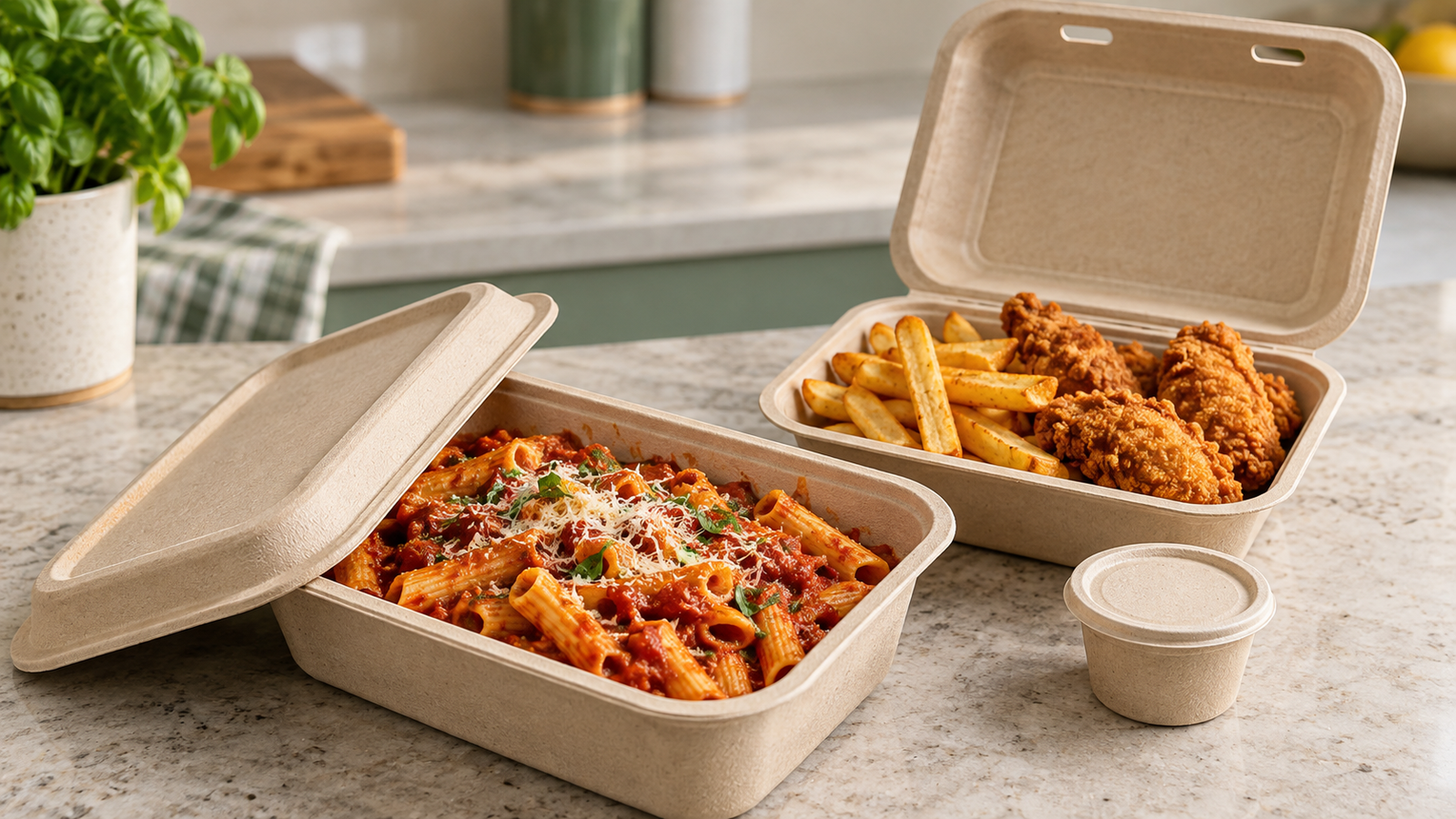
When sealed tightly, a container traps steam, and trapped steam makes crispy food soft before it is opened. Vented lids let that moisture escape while still helping prevent liquid from leaking, which matters most for anything that’s supposed to have texture when it arrives: fries, fried chicken, anything breaded. It is a small design detail that has an outsized effect on whether food tastes like it just left the kitchen or sat in its own steam for twenty minutes.
Tamper-Evident Seals Do Double Duty as Trust and Branding
A customer eating in watches their food being plated. A delivery customer doesn’t see any of that. So a tamper-evident seal that shows visible damage if opened early is a true trust signal, not a formality. It’s also free real estate for a logo, which matters even more when you’re running multiple virtual brands out of one location in a cloud kitchen, where the seal may be the only consistent branded touchpoint for a given concept.
Standardized, Stackable Sizes Keep the Packing Line Moving
High-volume delivery kitchens pack dozens or hundreds of orders per shift, often across multiple virtual brands sharing a kitchen and packing line. Containers that nest neatly in a family of standard sizes speed up the process, reduce packing errors, and make it easier to fit orders into delivery bags without gaps that let food shift in transit.
Packaging Is Often the Only Brand Touchpoint a Cloud Kitchen Has
Put it all together, and the conclusion is the same: When you have no physical dining space in a kitchen, packaging is the brand experience. The customer’s perception of the food depends not only on the food itself but also on the performance of the container—whether it arrives leak-free and at the right temperature, with the seal intact.
Package for Delivery Without Compromising on Sustainability with Planetize Packaging
It has to get containment, temperature, texture and branding right while also building customer trust, with no room to fix a mistake once the box leaves the kitchen. This is a higher bar than what was ever expected of dine-in packaging, and it’s worth using containers built for this job rather than repurposing them.
Planetize Packaging offers sustainable packaging designed to endure real delivery conditions with certified compostable fibre containers that are grease- and heat-resistant while still supporting the sustainability story food businesses want to tell. Bulk pricing helps keep cost per unit manageable as order volume scales, which matters for a cloud kitchen running high delivery volume daily. Contact Planetize Packaging to learn more about packaging that ships—and that doesn’t require a tradeoff between performance and sustainability.
FAQs
So how low can the temperature of food actually get during delivery?
Without the right packaging and insulation, hot food can drop from around 165°F to 120°F by the time it’s delivered. That’s enough of a drop to noticeably change the taste and texture by the time you open the box.
What makes a container “delivery-safe” versus just dine-in safe?
Dine-in packaging only needs to hold food for a few minutes, while delivery packaging must contain food, retain temperature and withstand stacking and actual transit conditions. Dine-in containers aren’t often tested for any of that.
Is there a required material for tamper-evident seals?
Not necessarily, but the seal should show visible evidence if it is opened or tampered with before delivery, so that usually rules out anything that can be removed and reapplied cleanly. It is also used as a branding surface for many cloud kitchens.