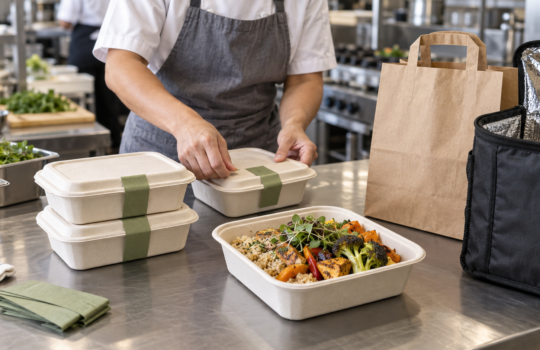
Hot food packaging gets most of the attention, but cold food has its own set of issues. Salads wilt, dressing leaks, lids fog up, and a bowl that looked fresh at the restaurant can look tired by the time it reaches a customer. Cold food packaging needs to maintain texture, showcase the food, and withstand the volume of a busy kitchen in restaurants, delis, and grab-and-go counters. This guide will help you understand what to look for in each packaging option.
Cold Food Packaging – What to Look For
Clear, Rigid Lids Let the Food Sell Itself
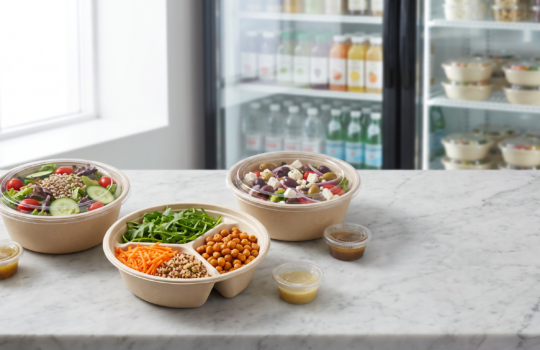
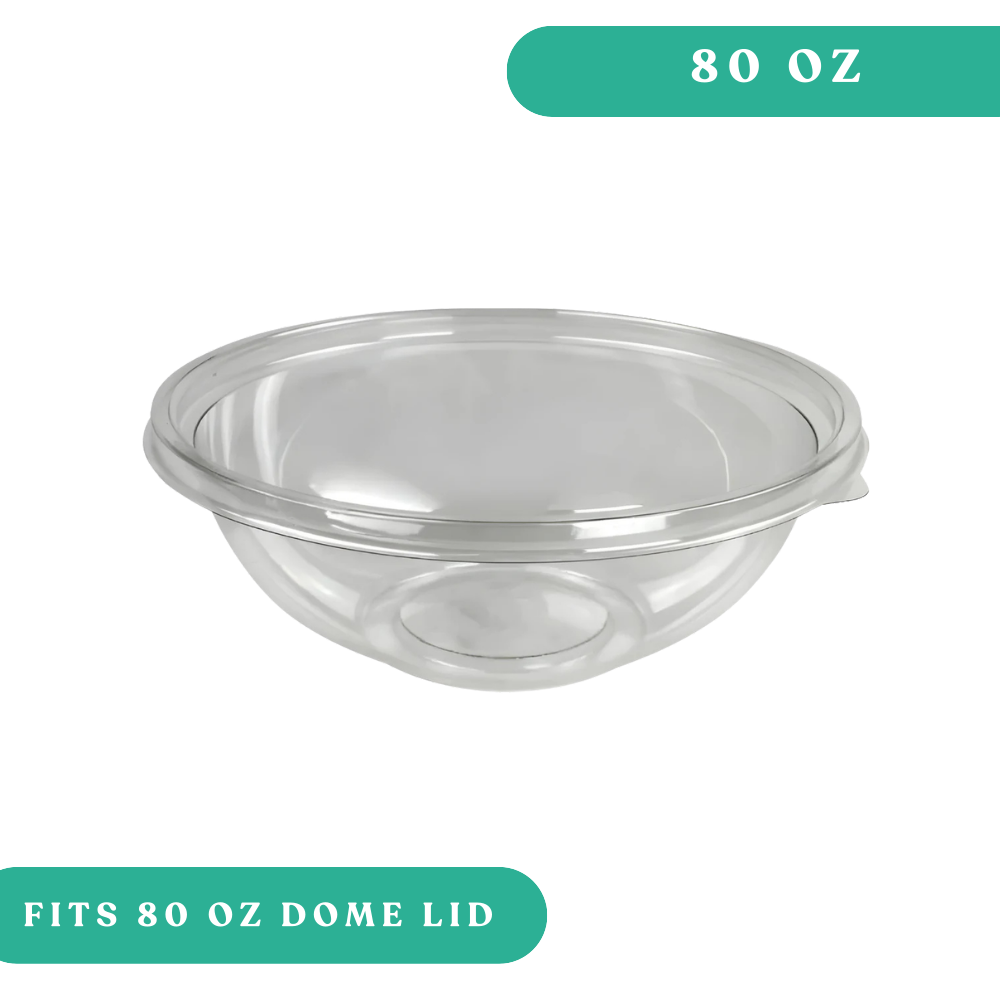
Salads and cold meals sell on appearance, so clear lids and rigid bowls are more important here than for most hot items. A customer reaches into a grab-and-go fridge to take what they can see. Both clear PET and clear plant-based lids are functional, but fibre bowls with a clear lid are a more natural look without hiding the food. Whatever the material, the lid has to fit flush and close tight. A loose lid is the first thing customers notice.
Condensation Control with Anti-Fog Lids and Ventilation
Condensation can form when temperature changes cause moisture to collect inside a container, fogging lids and potentially affecting food quality. Anti-fog lids keep food in sight, and some designs have small vents to allow moisture to escape. Packing food properly chilled and maintaining the cold chain can help reduce condensation, alongside suitable lid features.
Separate Dressing and Sauce Cups Keep Salads Crisp
The best way to keep a salad from getting soggy is to pack the dressing separately in sealed portion cups, instead of pouring it on top or putting it into an unsealed container. Compartment bowls keep wet toppings, crunchy toppings and greens separate until the customer is ready. Using separate dressing cups adds a small cost per order but can help prevent complaints about wilted salads.
Match Material for Cold Service Only
Some plant-based plastics, such as PLA, can only be used for cold food. PLA salad bowls and lids are a great choice for displaying cold food and for grab-and-go, but not for hot contents, so don’t include them in any menu item that mixes hot and cold. Ask suppliers for the certification behind a compostable claim, and whether local facilities will even accept the material. Sustainability claims are only good for a brand if they are true.
Maintain the Cold Chain After the Container Is Sealed
Packaging is one link in a long chain. In Canada, cold food is generally required to be maintained at or below 4°C (39°F), but specific food-safety requirements can vary by jurisdiction and food type. Food must not remain in the temperature danger zone for longer than the applicable food-safety limits. A container won’t fix a warm fridge or a long wait on the counter, but it can help. Insulated bags and ice packs keep food cold longer for deliveries, but the amount needed varies with the distance.
Standard Sizes and Stackability Keep Costs Down at Volume
A kitchen running several cold items doesn’t want a different lid for every bowl. A small family of bowl sizes with shared lids makes ordering easier, speeds up the packing line and stacks neatly in storage and in the display fridge. It’s also where cost per unit gets hammered out. A standardized range is easier to buy in volume than a mishmash of one-off items.
Things to Watch For in Cold Food Packaging
Most complaints about cold food packaging stem from a few common mistakes.
Sealing Food Before It Is Completely Cooled
Warm food releases moisture that can condense inside a closed container as temperatures change, wilting greens and fogging lids.
Dressing Mixed In or Loose Inside the Container
Dressing that leaks or comes into contact with greens can make them soggy.
Interchanging Hot-Rated and Cold-Only Items
Before you pair them, check what each lid and bowl is designed for.
Using Bowls That Are Too Large
Excess space can allow ingredients to shift during transport and arrive messy. Pick the size that matches the serving.

Buy Affordable Cold Food Packaging at Wholesale Prices at Planetize Packaging
The secret to good cold food packaging is a short checklist: a secure lid that seals properly, a strategy for managing condensation, dressing kept separate, a material that suits cold service, a cold chain that remains unbroken, and a range of standard sizes you can buy in bulk. Nail those and a salad looks as good as it did at the pass, with fewer complaints and fewer remakes. And it’s one of the easier places to build a sustainability story by explaining the specific benefits of the materials chosen, where applicable.
Planetize Packaging provides sustainable packaging solutions to restaurants, caterers and hospitality groups and offers bulk-friendly pricing to keep the cost per unit manageable as order volume increases. If you are building out a cold menu, or reworking packaging that is not holding up, Planetize Packaging can help you match options to your menu and your volume. Get in touch with Planetize Packaging to discuss your cold menu requirements.
FAQs About Cold Food Packaging
How Do You Stop Salad from Getting Soggy in Takeout Containers?
Separate wet toppings from greens with a compartment bowl, package dressing separately in sealed portion cups, and use an anti-fog or vented lid. Properly chilling food before packing also helps reduce condensation that can wilt greens.
Can You Use PLA Containers to Hold Hot Food?
Generally, no. PLA is typically suitable for cold foods, so use PLA salad bowls and lids for cold items such as salads, fruit and deli items—not anything served hot.
In Ontario, What Temperature Should Cold Food Be Kept At?
Cold food is generally required to be held at 4°C (39°F) or colder, subject to the applicable food-safety requirements. Food must not remain in the temperature danger zone for longer than the applicable time limits.
Do Salad Containers Always Need to Be Clear?
Salad containers are not necessarily clear. Not by rule, but cold food sells on appearance, so a clear lid or a clear window helps customers see what they are buying, especially in a grab-and-go fridge.