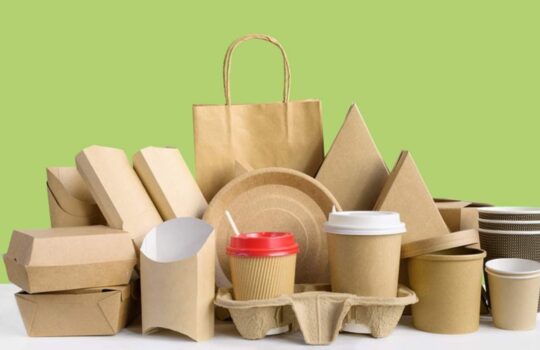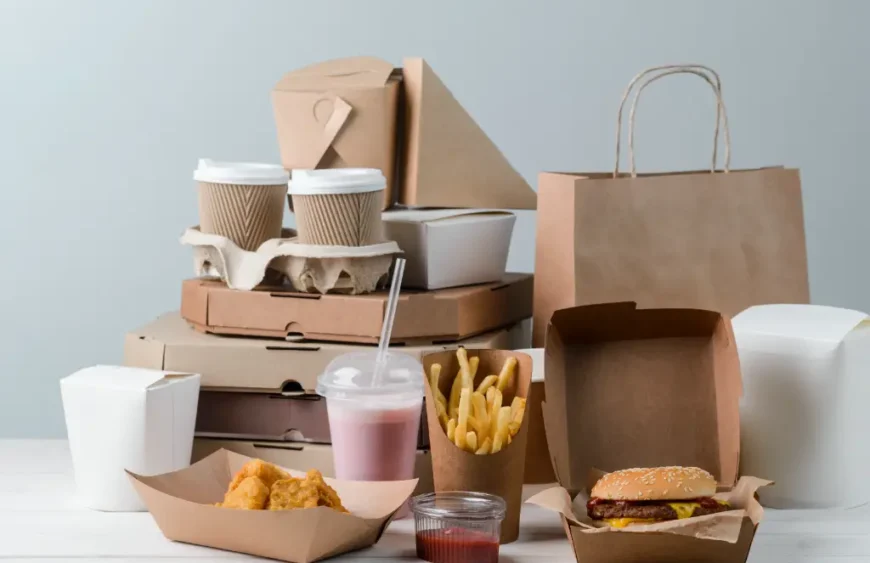
Delivery is a tougher challenge for food packaging than dine-in or pickup ever will be. A container that sits well on a counter may still leak when it’s jostled around in a delivery bag, stacked against other orders and left sealed for twenty minutes or more before someone opens it. This is exactly when leak-resistant food packaging matters most: there’s no one around to catch a problem before it becomes a mess in someone’s car or on their doorstep. That’s what really makes packaging hold up to a delivery trip.
What Really Makes Packaging Leak-Resistant
Two factors combine to make something leak-proof: the material itself and how well the lid seals. A truly waterproof material, greaseproof material still leaks if the lid doesn’t hold pressure, and a great lid design can’t fully overcome a material that allows liquid to seep through. Both point to the strongest delivery options.
Why Delivery Packaging Faces a Tougher Test
A container bound for delivery gets tilted, stacked and jostled in ways a dine-in order never does. It also stays sealed longer, giving grease and moisture more time to do their work against whatever barrier the packaging provides. Plus, there’s a chance you’ll be packed with other orders in an insulated bag, and a single little leak in one container can ruin everything else riding along with it.
Locking & Snap-Fit Lids Are As Important As The Container
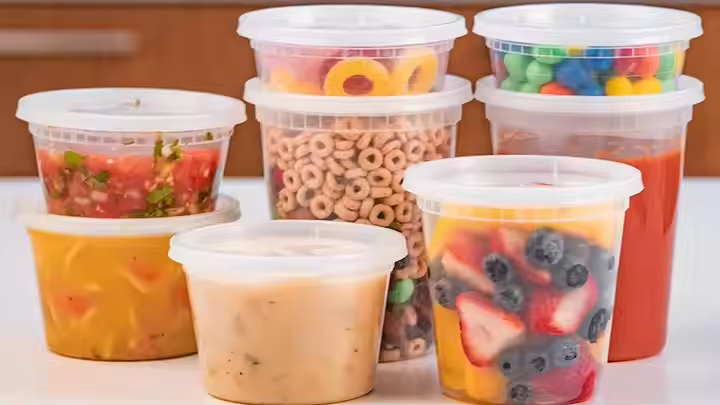
Good lids, whether it be a locking tab, snap-fit edge or tight fit instead of a simple loose-fitting cover, are often the difference between a container that makes it through delivery and one that doesn’t. No amount of leak resistance in the material can make up for a lid that shifts or pops open when in transit, so the lid design should be as carefully considered as the material when selecting packaging for delivery.
Polypropylene: The Conventional Leak-Resistant Standard
Polypropylene, or PP as it’s often known, has been the standard for leak-resistant delivery packaging for soups, sauces and other liquid-heavy dishes. It has good heat resistance and is a good leacher. That is why you see it so often in delivery-focused packaging. It’s a tried-and-trusted choice, but it doesn’t have the same green credentials as some newer options.
Bagasse: A Natural Grease & Water Resistant Alternative
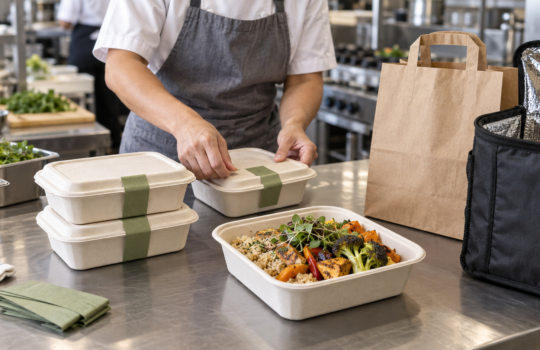
The fibre left over from processing sugarcane, called bagasse, naturally repels grease and moisture, so it does not require a plastic liner or wax coating. This makes it a truly compostable option, and it can still stand up to oily or wet foods, which is part of why it has become a popular substitute for plastic in containers, clamshells, and other delivery packaging. That’s why Planetize Packaging offers bagasse clamshell options, giving businesses a leak-resistant choice that doesn’t rely on traditional plastic.
PLA-Lined Paperboard: Added Barrier Protection
A thin PLA layer on paper or kraft packaging provides moisture and grease resistance that plain paper alone cannot provide. When correctly certified, PLA-lined paperboard can still be considered compostable, offering a middle ground between the aesthetic and tactile feel of paper packaging and the barrier protection required for liquid-heavy foods.

Matching Packaging to What You’re Really Delivering
Not all delivery orders require the same amount of leak-tightness. Soups, sauces, curries and other dishes with a lot of liquid require the best possible combination of material and lid design. Drier items, baked goods, sandwiches, or packaged snacks are more flexible and don’t require the same heavy-duty approach. By matching packaging to the actual risk level of each menu item, you avoid over-ordering premium packaging for food that never needed it.
Planetize Packaging: Leak-Proof Packaging for Real Delivery Conditions
Getting leak resistance right for delivery means looking past the marketing language and knowing what a material and lid combination really stands up to in transit. The right choice depends on what is actually going into the container, with polypropylene offering maximum reliability and bagasse providing a compostable option that still resists grease and moisture.
Planetize Packaging provides sustainable packaging solutions that can withstand real delivery conditions, such as bagasse containers designed to be leak-resistant without traditional plastic. To learn more about leak-resistant packaging that fits your menu and holds up all the way to the door, contact Planetize Packaging.
FAQs
What is the best material for leak-proof food packaging for delivery orders?
Polypropylene has long been the material of choice for dishes that are heavy on liquids, and bagasse provides a compostable alternative that naturally resists grease and moisture without a plastic liner.
Is the packaging of Bagasse leak-proof
Yeah. Bagasse is made from sugarcane fibre. It is naturally grease- and water-resistant, which makes it a good choice for many food delivery containers without a plastic or wax coating.
Why does the lid on delivery containers still leak?
The problem is usually the lid’s design rather than the container’s material. Loose-fitting lids can slide off or pop open during transit. A locking or snap-fit lid handles the jostling and stacking that happens during delivery much better.