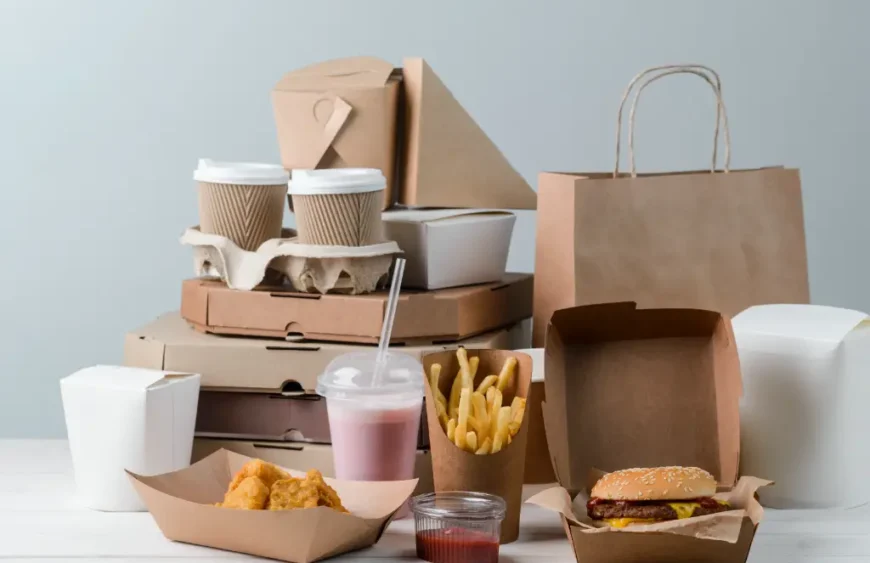
Sustainable packaging is increasingly a genuine point of difference for food brands. Compostable and recyclable packaging are the two options most businesses choose. They’re often discussed as though they’re interchangeable. Still, they work differently, and choosing the right one for a particular product can make a real difference in environmental impact and cost. This guide explains how each option works and how to walk through which option is right for your menu.
Compostable and Recyclable Packaging Address the Same Problem in Different Ways
Recyclable packaging is collected and processed into a new material, keeping it in use rather than sending it to landfill. Compostable packaging is different. It breaks down into organic matter and returns to the soil, rather than being reprocessed. Both cut down waste. But how they work, and the circumstances needed for each to function, are very different.
What it Takes for Packaging to be Truly Compostable
A compostable claim should mean something: the material has been tested and certified to break down in a defined timeframe under composting conditions. This isn’t the same as a vague “eco-friendly” or “natural” label that tells you nothing about how the material actually behaves after disposal. Most certified compostable packaging is intended for industrial composting facilities rather than backyard compost bins because those facilities can achieve higher, more consistent temperatures. If a product isn’t separately certified as home compostable, the safer assumption is that it will require commercial composting infrastructure to break down as intended.
What Actually Makes Packaging Recyclable
Recyclability is not only about the material but also about local infrastructure and the cleanliness of the packaging when it’s thrown away. A material that can be recycled in one city may not be accepted by facilities in another, so it’s worth knowing what is actually processed locally instead of assuming recyclability travels everywhere. Contamination is also important: Clean, dry packaging passes through a recycling stream much more easily than anything covered in food residue.
Why Grease and Food Contact Are Important in the Calculation
Food packaging faces a challenge that many other types of packaging don’t: grease, sauce and food residue. Recycling facilities often refuse to accept heavily soiled packaging, like a greasy takeaway container or used soup cup, because contamination like that can ruin an entire batch. That same greasy packaging is often a much better candidate for composting, where organic residue isn’t a dealbreaker the way it is in the recycling stream.
Matching Packaging Type to How It’s Actually Used
A useful approach would be to think about the common use of each item. Containers, wraps, and anything that regularly comes into contact with food and grease tend to lean toward compostable options. Recyclable materials may be a better fit for dry goods packaging, cleaner packaging, or some lids that don’t come into contact with food as often, if local facilities actually take that material.
Questions to Ask Your Packaging Supplier
Before you decide on a packaging line based on a sustainability claim, it’s worth asking a few direct questions: What makes this compostable or recyclable, exactly? Is it meant for industrial or home composting? Does the waste infrastructure where you actually operate support disposing of it in that way? A supplier that can answer clearly is a better long-term partner than one that is leaning on general “green” language.
Planetize Packaging. Packaging That Fits Your Kitchen’s Real Operational Needs
Whether you choose compostable or recyclable packaging depends on which end-of-life option makes the most sense for how a product is actually used, rather than picking whichever term sounds greener on its own. Get that match right, and you protect both your environmental impact and your credibility with customers who are listening more closely to these claims than ever before.
Planetize Packaging partners with restaurants, caterers, and hospitality groups to find packaging that works for real kitchen operations, from cost per unit to consistent branding to the practical realities of a busy service, without asking you to compromise on your sustainability story. Contact Planetize Packaging to discuss what compostable or recyclable options are right for your menu.
Frequently Asked Questions
What is the difference between compostable and recyclable packaging?
Compostable packaging breaks down into organic material under composting conditions. Recyclable packaging is collected and reprocessed into new material. Both reduce waste, but through different processes and with different requirements.
Can I put compostable food packaging in my backyard compost bin?
Not always. If a product is certified for home composting, it will have a separate certification. Most certified compostable packaging is designed for industrial composting facilities, which reach higher temperatures than home composting systems.
Greasy food containers are not good candidates for recyclable or compostable packaging, right?
In general, compostable is the better choice. Grease and food residue contaminate a recycling stream, and composting is the way to go for organic residue without the disqualifying issue.