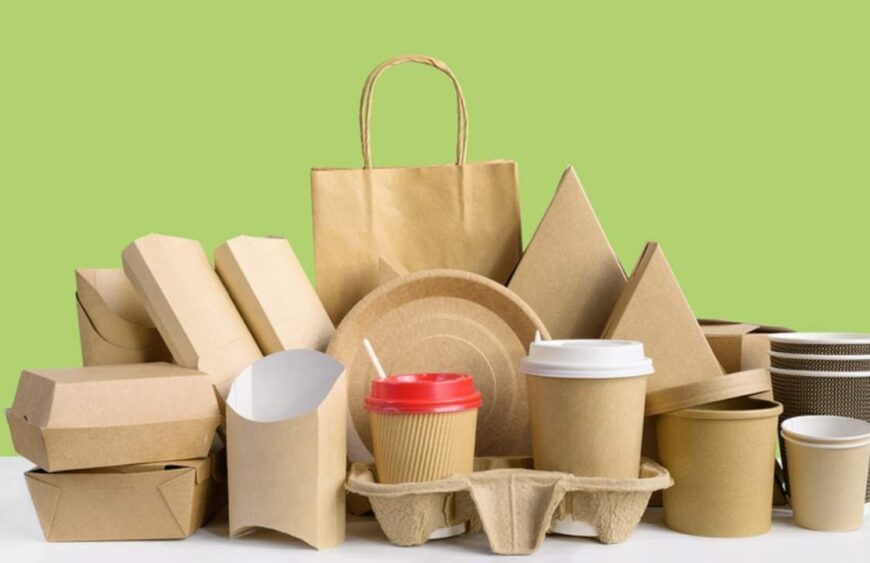
For restaurant owners, packaging is everything. It needs to protect the food, survive transit, and fit the budget, all while supporting the sustainability claims customers now expect. The good news is, sustainable food packaging has come a long way from paper straws falling apart. Today, there are solutions for hot food, cold food, delivery, dine-in, and everything in between, with varying strengths depending on your menu and order volume. This manual will walk you through the major categories available and how they relate to your operation.
How to Choose Sustainable Food Packaging for Your Restaurant: The Options
Not all packaging types work for every kitchen. The needs of a busy lunch spot doing high delivery volume are different than a sit down restaurant packaging the occasional to-go order. Here are the categories most restaurants and caterers rely on, and what each does best.
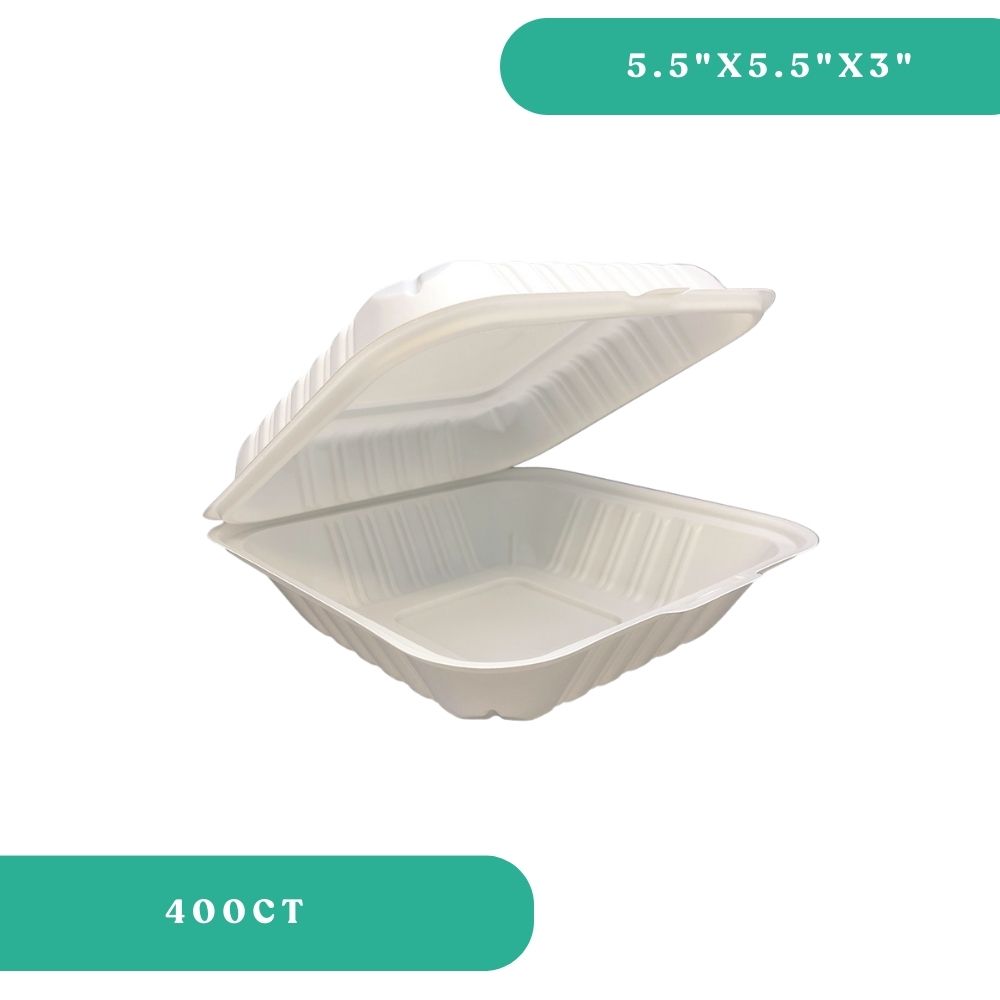
Fibre Containers & Clamshells, Compostable
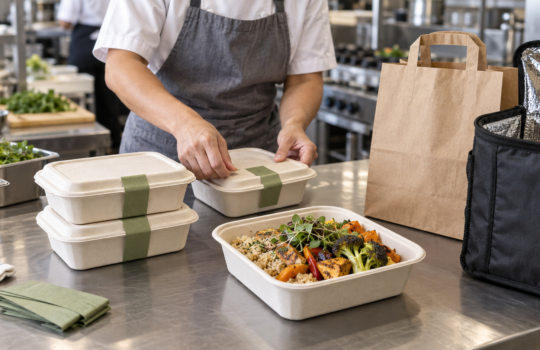
Typical substitutes to polystyrene clamshells are moulded fibre containers, usually using bamboo or recycled cardboard pulp. They resist grease and moisture better than plain paper, stack nicely for storage and work for everything from burgers to pasta. Look for a recognised compostable certification (like BPI) on the container, not just a generic “eco” label. Compostability depends on the materials and manufacturing process, not just the appearance.
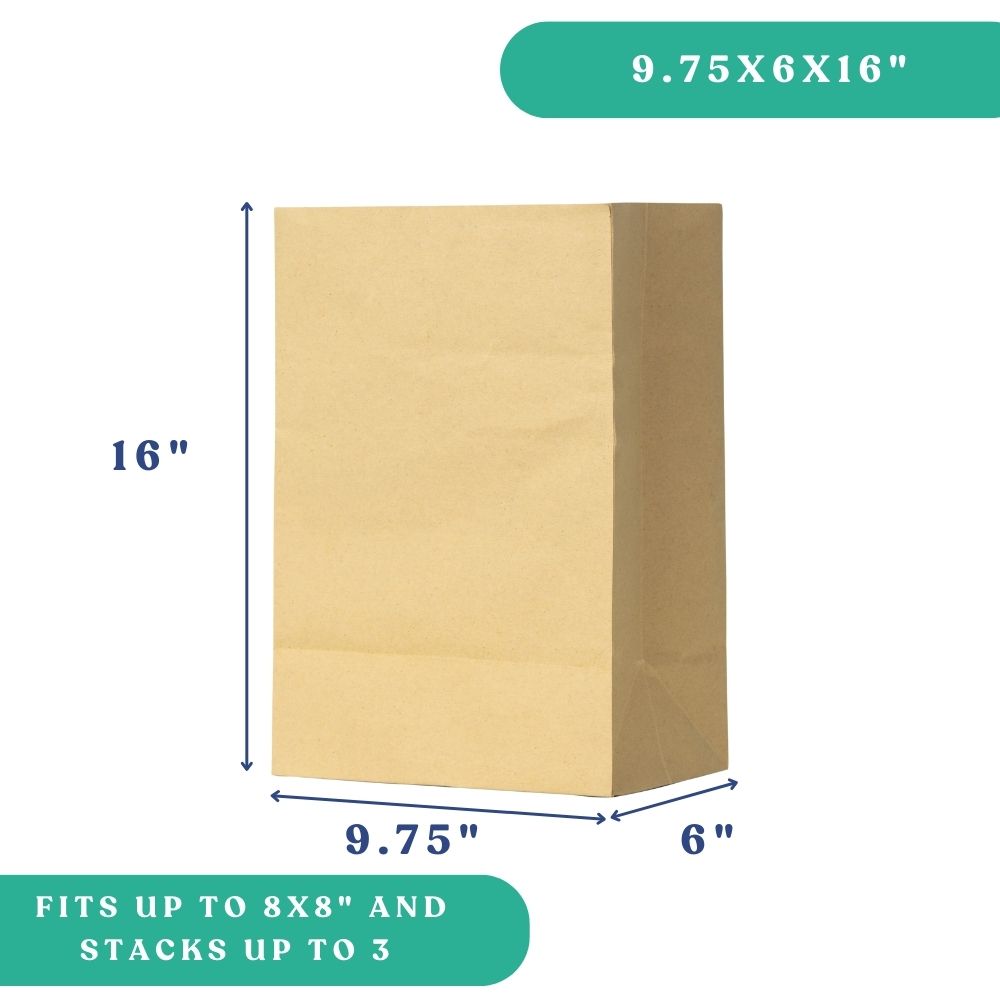
Kraft Paper Bags & Wraps
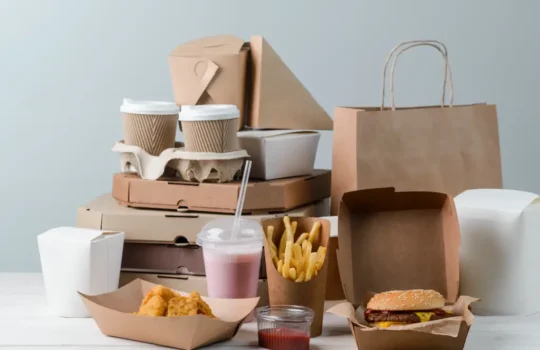
Kraft paper bags are the backbone of takeaway, and it’s easy to see why. lightweight, inexpensive at scale, and easily customised with a stamped logo or printed design. Kraft paper also reduces shipping weight compared to rigid containers, which could be a factor in third-party delivery charges for food businesses with high delivery volume. Wraps and sandwich papers, made of the same material, are good for hand-held items that don’t need a container.
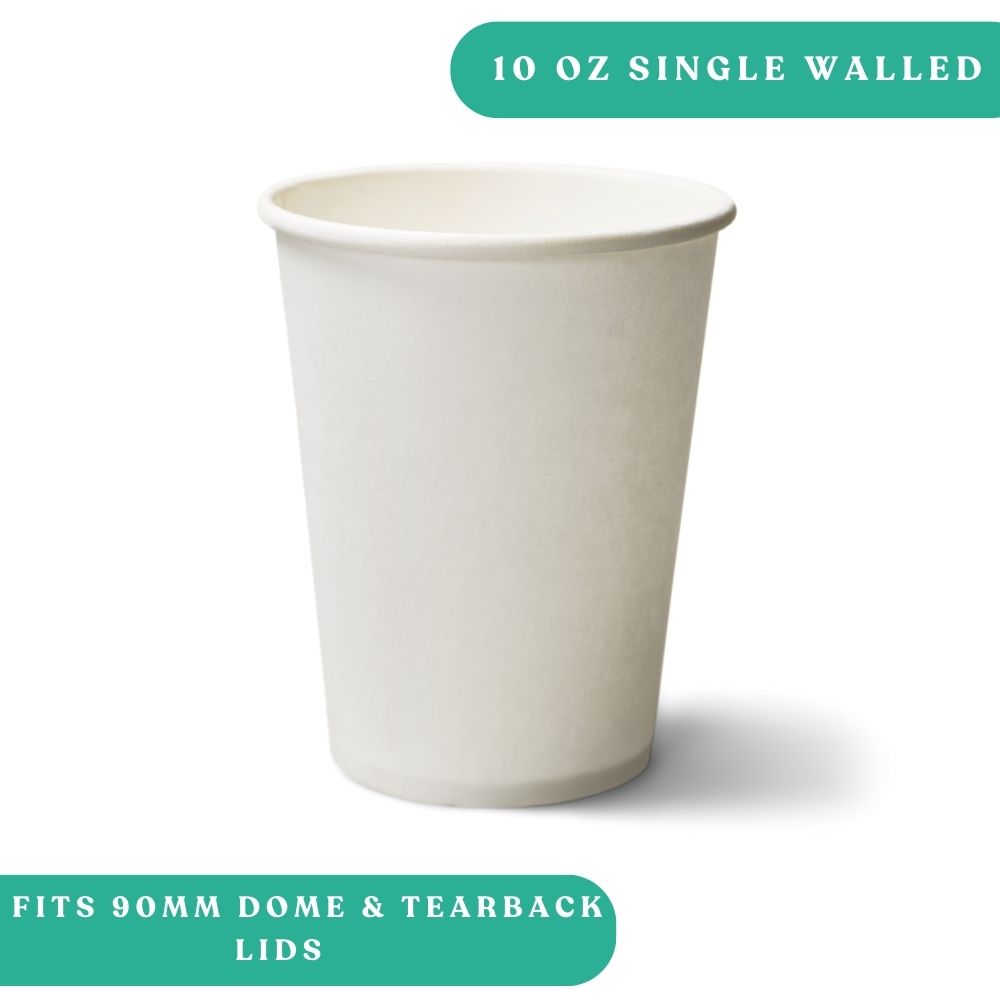
Plant Based PLA Cups, Lids and Cutlery
PLA (polylactic acid) cups are a plant-based alternative to conventional plastic cups for cold drinks, smoothies and iced coffee. They appear and handle like traditional cups so there’s no learning curve for staff or customers. It’s the same material that goes into the lids and cutlery, which is important because forks, knives and spoons are often the last piece restaurants change when they change their packaging. Tradeoff to Know: PLA generally needs industrial composting conditions to fully decompose, so it’s better to be honest with customers about how to dispose of it rather than claiming it composts anywhere.
Bagasse (sugarcane) Plates and Bowls
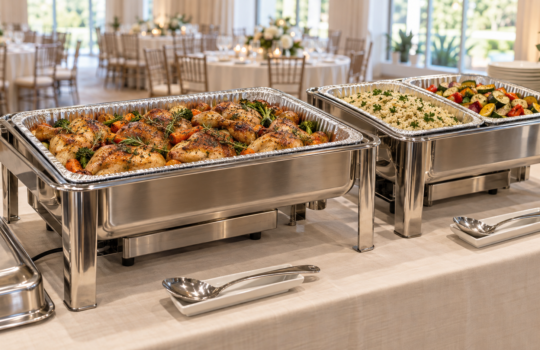
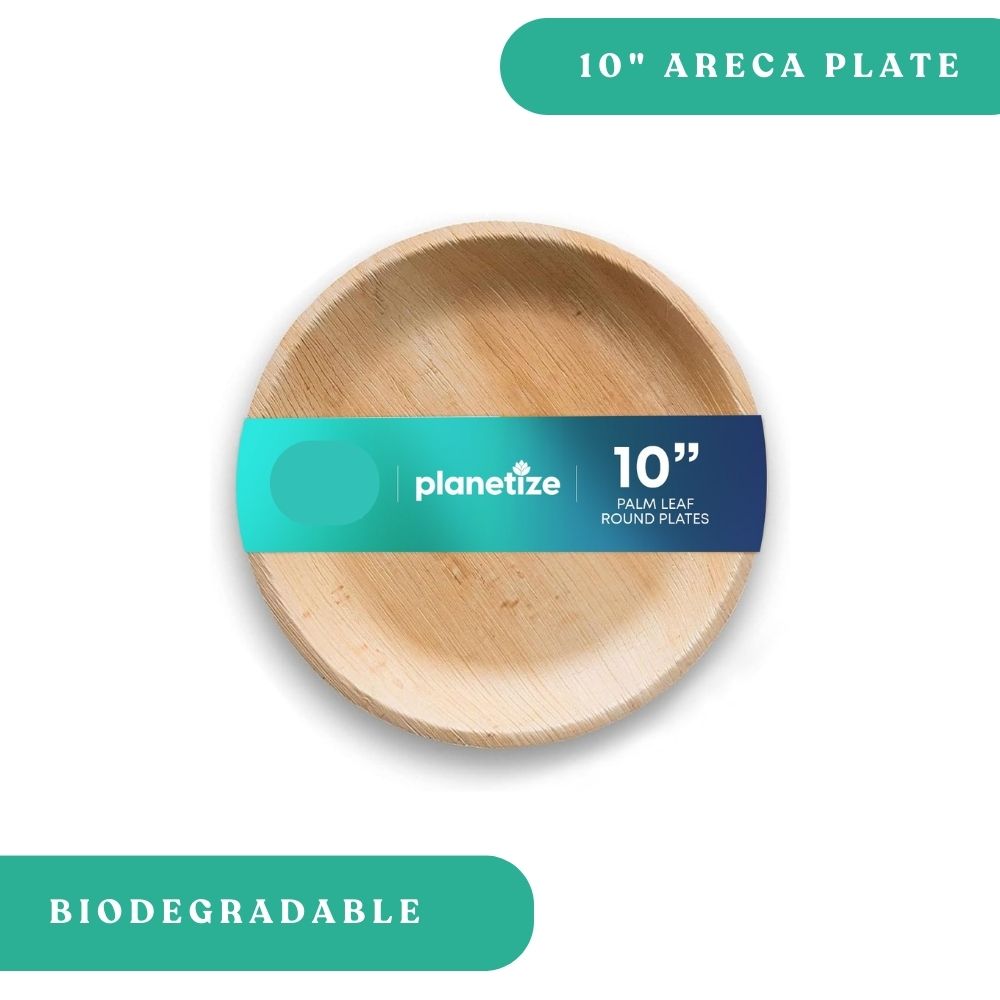
Bagasse is the fibrous waste product left over from processing sugarcane, and it’s shaped into sturdy plates, bowls and trays. It does not soak through and stands up to hot and oily foods, making it a good choice for catering trays, buffet lines and hot entrees that need to survive a drive across town. Many bagasse products are certified compostable. As with any claim, don’t assume; check the specific product’s certification.
Recyclable Paperboard Boxes
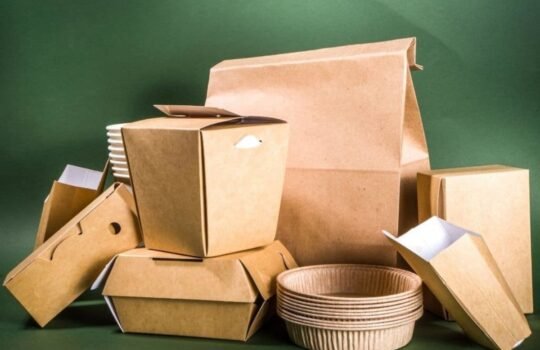
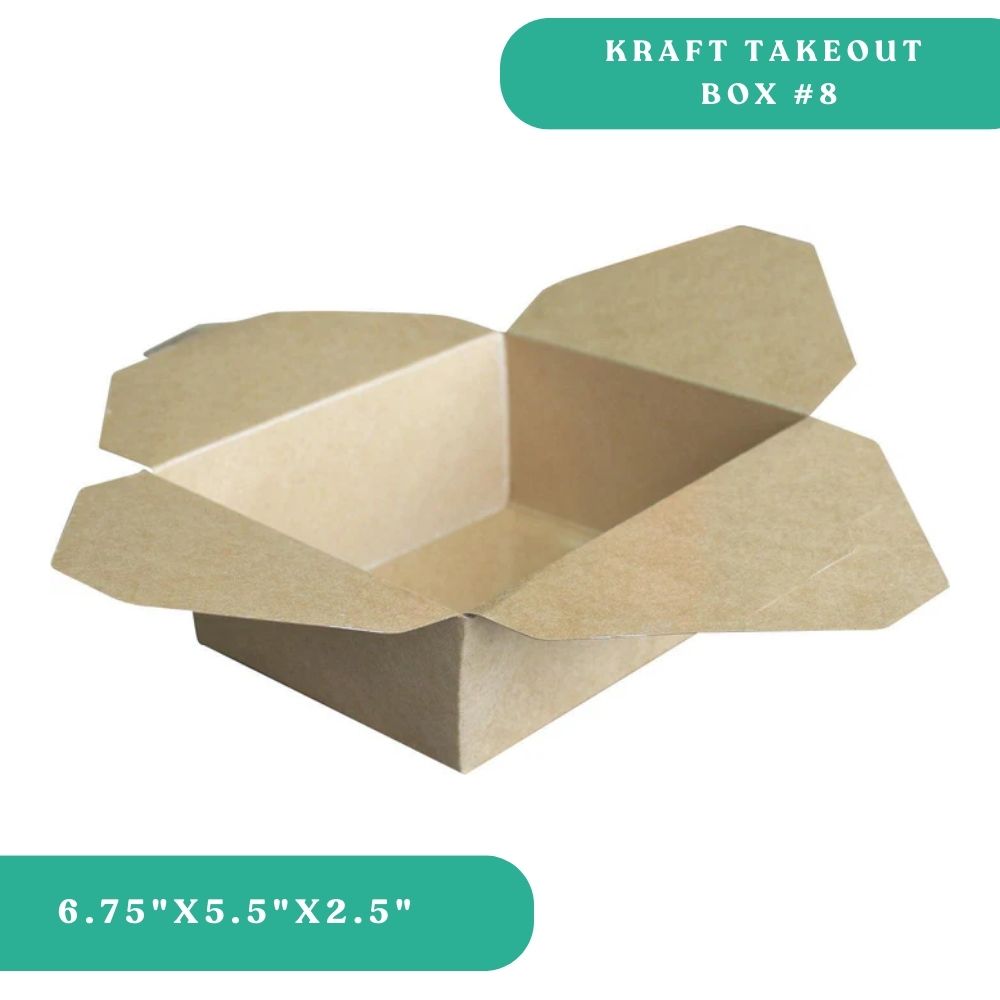
Lightweight paperboard boxes for bakery goods, sandwiches and light meals offer a good balance of structure and cost. They fold flat for storage before use, which matters for restaurants with limited back-of-house space, and most are recyclable through standard municipal programs. Paperboard also lends itself well to branding, from simple logo stamps to full custom printing for restaurants who want packaging to double as marketing.
Serve Up Your Sustainability With Affordable Supplies, Only Available at Planetize Packaging
You don’t need to completely overhaul your whole supply chain overnight to make the shift to sustainable food packaging. Starting with your highest-volume item, whether that is a takeout clamshell or a to-go cup, work outward from there. Most of what a restaurant needs can be covered with the right mix of compostable fibre, kraft paper, PLA, bagasse and paperboard, without cost or performance tradeoffs.
Planetize Packaging collaborates directly with restaurants, caterers, and hospitality groups to find sustainable packaging solutions that work under real kitchen conditions and with real order sizes. Bulk pricing is designed for food businesses, not for single retail orders, so the cost per unit becomes manageable as volume increases. Our catalogue and pricing make the switch easy if your restaurant is ready to switch on sustainability with packaging that actually works.
Frequently Asked Questions
Does sustainable food packaging cost more than traditional plastic?
Depends on material and volume of order. Some options, like kraft paper, can often compete on cost with plastic at scale, and certified compostable containers can command a premium. For higher volume restaurants, bulk pricing narrows that gap considerably.
What’s the difference between compostable and biodegradable packaging?
Compostable packaging is certified to break down into non-toxic material within a certain period of time under specific conditions, usually during industrial composting. Biodegradable is a much vaguer and less regulated term and does not promise a time frame or the necessary conditions.
Can sustainable packaging withstand hot, greasy foods without falling apart?
Yes, if it’s a good match. Bagasse and moulded fibre containers are designed to withstand grease and moisture better than plain paper, so they’re good for hot entrees and greasy foods.